Educational content only — not a diagnosis, therapy, or personalised advice. Written by an independent researcher, not a licensed clinician. Learn more.
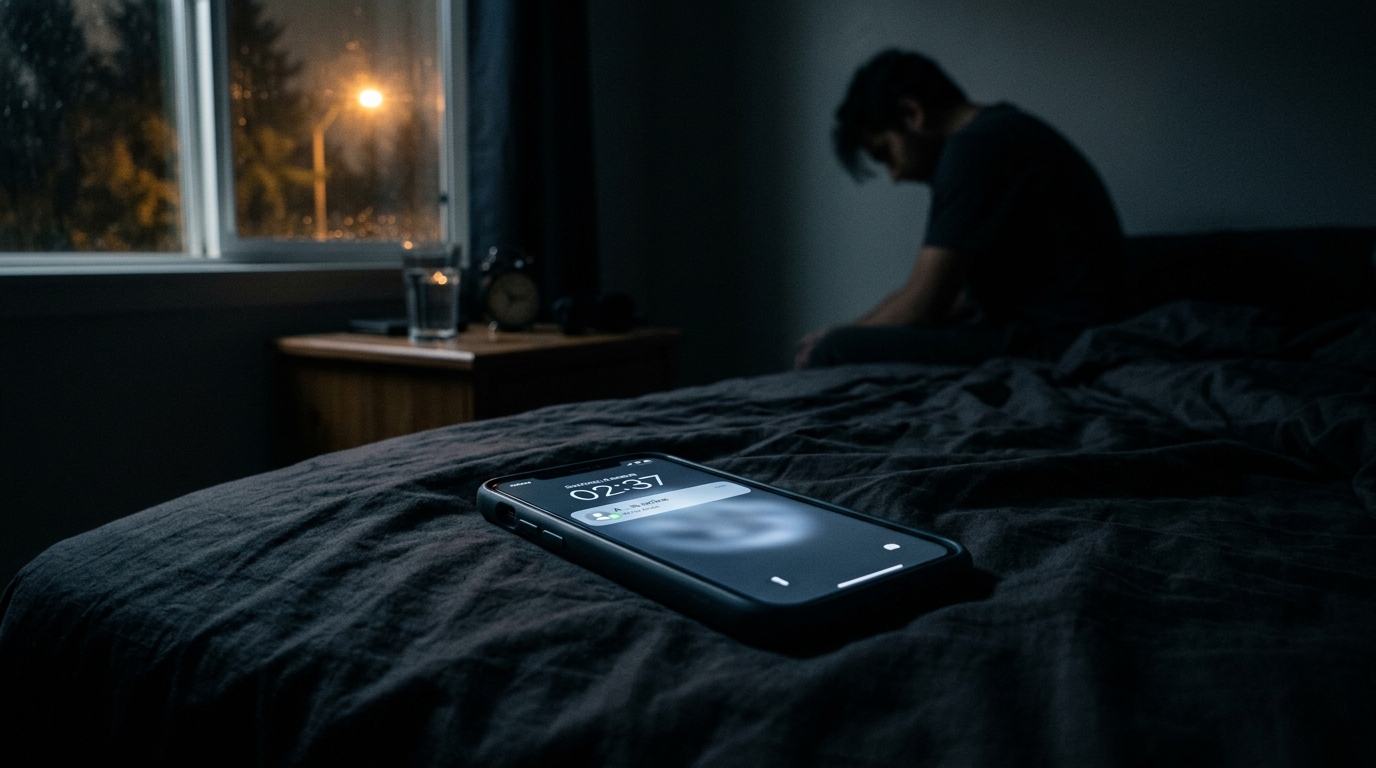
If you find yourself checking your screen every few minutes, you already know how easy it is to overthink unanswered texts. You send a casual message, expecting a quick reply, but hours pass without a word. Your mind immediately begins searching for explanations, usually settling on the worst possible conclusion. Your focus drifts from your work, your chest feels tight, and your phone starts to feel like a source of stress rather than a tool for connection.
This anxiety is not a sign that you are broken or unusually fragile. It is a highly common psychological response to a modern communication medium that our brains were never designed to handle. When we are left waiting, our minds hate the empty space and rush to fill it with stories of rejection, abandonment, or personal failure.

Table of Contents
The Spiral of the Unsent Reply: Clara’s Story
To see how easily this pattern takes hold, look at Clara. She had been dating Julian for a month. The connection felt balanced, with regular conversations and three warm, engaging dates. On a Thursday afternoon, Clara sent a lighthearted message asking about his upcoming weekend plans.
Five hours passed. Then ten. By Friday morning, Julian’s lack of response felt heavy and loud. Clara began reviewing their last date in her mind, searching for any small mistake she might have made. Did she talk about herself too much? Was she too forward? She opened their chat history to analyze the length and tone of her previous messages, looking for proof that she had ruined the connection.
By noon, she was checking his social media profiles to see if he was online elsewhere. When she saw he had active accounts but still hadn’t replied to her, the anxiety intensified. Clara wasn’t just waiting for a text; she had completely paused her own life, letting her peace of mind depend entirely on a notification that hadn’t arrived.
Why We Overthink Unanswered Texts: The Cognitive Trap
When we look at why we overthink unanswered texts, we have to look at how our brains process incomplete information. Human beings have an innate need for cognitive closure. When a conversation is left hanging, our brain views it as an unfinished task, keeping it active in our working memory. This psychological tension makes it difficult to focus on anything else.
Texting also exposes us to a behavioral pattern known as intermittent reinforcement. In psychology, this occurs when a reward is delivered on an unpredictable schedule. If a partner sometimes replies within seconds and other times takes half a day, the unpredictability makes us focus on the interaction even more. Like a slot machine, the uncertainty makes the eventual response feel incredibly rewarding, which keeps us hooked on checking our screens.
Also, digital text removes the vital context of face-to-face communication. We cannot see body language, hear tone of voice, or observe facial expressions. Without these non-verbal cues, our minds rely on cognitive distortions to make sense of the silence. We assume we are being rejected (mind-reading) or convince ourselves that the relationship is completely over because of one quiet evening (catastrophizing).
Anxious Spiral vs. Real Inconsistency: Telling the Difference
It is vital to distinguish between internal anxiety and a partner who is really withdrawing. Not all overthinking is baseless; sometimes, your distress is a reaction to a real lack of safety in the relationship. Learning to differentiate between these two states is crucial for your peace of mind.
An anxious spiral is typically internal and self-critical. It sounds like: “What did I do wrong? How can I fix this?” The focus is entirely on your own perceived flaws. You feel a frantic urge to double-text, apologize, or perform to win back their attention. Even if the other person is generally reliable, your mind treats temporary silence as a crisis.
In contrast, valid intuition is a response to chronic inconsistency. This is when a partner routinely uses communication as a tool for control, leaves you waiting for days without explanation, or changes their behavior abruptly after intimacy. If you are dealing with an emotionally unavailable partner, your anxiety isn’t just an internal problem—it is a warning sign that your relational needs for consistency and respect are not being met.

How Your Attachment Style Shapes the Silence
Your personal history heavily influences how you perceive a gap in communication. Our childhood experiences and early relationships form our attachment styles, which act as a blueprint for how we handle closeness and distance in adulthood.
Those with an anxious attachment style are hyper-vigilant to signs of distance. For them, a delayed text feels like an emotional emergency. They often interpret silence as an active threat to the connection and may try to force a response by sending multiple messages or demanding reassurance.
People with an avoidant attachment style respond to silence differently. When faced with distance or conflict, they tend to pull away, convincing themselves that they do not need the connection anyway. They dismiss their own distress to protect themselves from potential rejection.
A securely attached person, however, does not view silence as a personal attack. They assume the other person is busy, tired, or away from their phone. Their self-worth is not tied to a fast reply, allowing them to carry on with their day without needing constant external validation.
Ben’s Note: You cannot build a healthy, stable relationship with someone if you have to walk on eggshells to avoid losing their attention. A secure partner does not use communication as a reward or silence as a punishment. If someone’s texting habits consistently leave you feeling drained and anxious, it may be time to stop analyzing their behavior and start questioning if this pattern is actually healthy for you.
4 Grounded Ways to Stop the Texting Anxiety
While you cannot control how or when someone else decides to reply, you have full control over how you handle the waiting period. Here are four practical, self-respecting steps to help you stop overthinking unanswered texts and regain your focus:
1. Interrupt the Story and Challenge Your Assumptions
When you catch yourself imagining worst-case scenarios, pause and identify the story you are telling yourself. Remind yourself that silence is neutral information. Write down three alternative, realistic explanations: they could be in a long meeting, driving, or simply resting without their phone. By challenging your automatic thoughts, you break the cycle of catastrophizing.
2. Implement Physical Phone Boundaries
As long as your phone is within arm’s reach, your brain will continue to seek the dopamine hit of a notification. Put your phone in another room, turn it on silent, or use an app blocker for a set period. Start with thirty minutes. Focus entirely on a task that requires your physical presence—like cooking, exercising, or reading a physical book.
3. Shift the Focus to Your Own Reality
Anxiety thrives when we make someone else the absolute center of our life. When you feel the urge to check your phone, ask yourself: “What do I need right now?” Focus on your own comfort, your own hobbies, and your own friendships. Reclaim your time and energy rather than keeping your life on hold for someone else’s schedule.
4. Evaluate the Pattern, Not the Single Incident
If this is a one-time occurrence, give the other person the benefit of the doubt. However, if you are constantly left waiting, and your partner shows no effort to communicate consistently, you must look at the overall pattern. You deserve a connection that offers clarity and emotional safety. If they cannot provide that, it may be a sign of incompatibility.
To understand more about building healthy patterns and identifying balanced patterns, you can read more in our relationship psychology category.
Sources & Further Reading
- Psychology Today: For insight on how uncertainty and wait times affect our brains, read about the psychology of texting and anxiety on Psychology Today.
- Cleveland Clinic: To understand how early behavioral patterns shape adult behaviors, explore their breakdown of attachment theory on Cleveland Clinic.