
You’re doing everything you’re “supposed” to do. You’re polite, you’re agreeable, you’re always available. You’re the perfect “nice guy.”
So why does she still end up choosing the “bad boy,” or worse, just putting you in the friend zone?
Here’s the brutal truth: those very “nice” habits—or nice guy habits—you think are building attraction… might be the exact things that are silently killing it.
Today, we are not telling you to become a ‘jerk’. That’s not the answer. Instead, we are examining 5 specific “nice guy” behaviors that, according to psychological research on attraction, are often perceived as low value or a lack of confidence. Understanding this distinction is the key to breaking the cycle.
It’s a pattern many men report: ‘I treat her like a queen, but she treats me like a court jester.’ This happens because there’s a huge psychological difference between being a kind man and being a people-pleasing man. One is attractive, the other is not.
Habit 1: Being Too Agreeable & Avoiding All Conflict
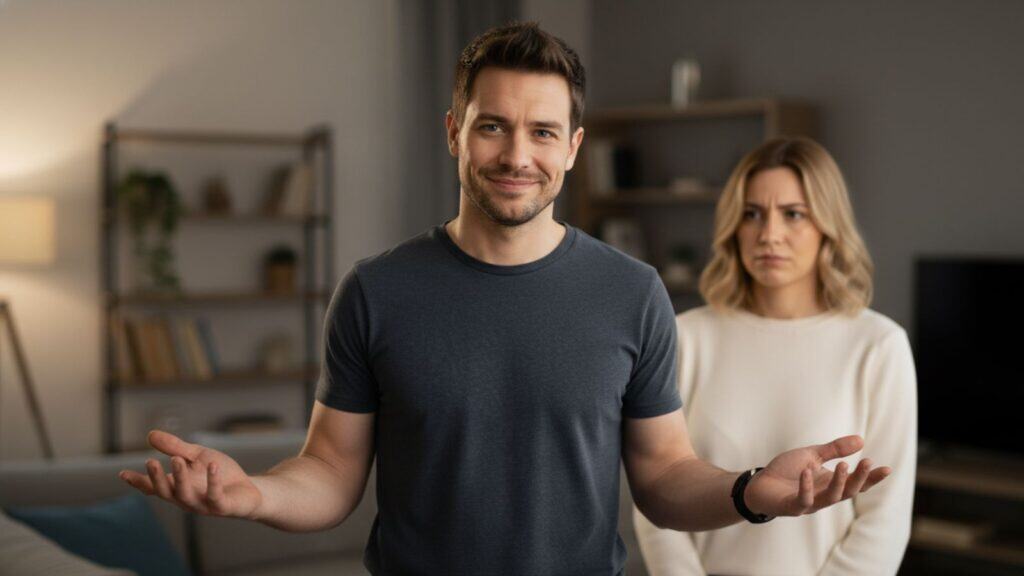
This is the classic “nice guy” trap. You think that by agreeing with everything she says—her taste in music, her political views, where to eat—you’re showing how compatible you are. You’re trying to create harmony by avoiding any and all friction.
The Psychology: This fails because of “differentiation.” Relationship experts often note that attraction requires a certain level of tension or “spark.” When you have no opinions, no backbone, and no dissenting thoughts, you “fuse” with her. You become predictable, boring, and psychologically, you become invisible. She can’t respect a man who doesn’t even seem to respect his own mind.
Imagine: Hailey says she loves a movie that Austin genuinely thought was terrible.
- The “Nice Guy” says: “Oh yeah, it was… it was great!”
- The Attractive (but Kind) Man says: “Really? I actually had a totally different take on it. I thought…”
This respectful disagreement doesn’t create a fight; it creates intrigue. It shows he has a mind of his own. That’s confidence.
Ben’s Note:
Let’s be clear. This isn’t about being argumentative. It’s about being authentic. A woman feels safe with a man who is grounded in his own truth. If you agree with everything, she subconsciously knows you’re lying, and she can’t trust you. Respectful disagreement is one of the highest forms of respect.
Habit 2: Placing Her on a Pedestal
This is what you see in movies. The man worships the woman, treats her like a flawless goddess, and makes his entire life about winning her. In the real world, this is a one-way ticket to the friend zone.
The Psychology: This is about perceived value. When you place her on a pedestal, you automatically place yourself below her. You are non-verbally communicating, “You are perfect, and I am lucky to even breathe your air.”
This creates an unbalanced dynamic. She can’t feel attraction for someone she feels is “less than” her. She may pity you, she may like you as a friend, but she won’t desire you.
An attractive man treats her like a human, an equal. He’s not afraid to playfully tease her. He compliments her, but he compliments her character or intellect, not just her looks. He interacts with her on a level playing field, which is where attraction is actually built.
Habit 3: Being Her “Emotional Tampon” or Free Therapist
This is a painful one. Because you’re a good listener, she feels comfortable. So she calls you… to complain about her boss, her friends, and worst of all, the “bad boy” who just broke her heart. You sit there for hours, absorbing her negative emotions, hoping that one day she’ll see what a great, supportive guy you are.
The Psychology: You haven’t become her “potential lover.” You’ve become her “utility.” You are now categorized in her brain in the same box as her mom or her best girlfriend—a source of comfort, but completely non-sexual. By never introducing any romantic or flirtatious tension, you have trained her to see you as a platonic resource.
What does an intelligent man do? He maintains boundaries. He’ll listen for a few minutes, then pivot. He might say, “That sounds tough. But hey, I don’t want to just be the guy you talk to about other guys. I’d rather talk about us. Let’s go out this weekend.” He introduces polarity. He’s a potential lover, not a therapist.
Habit 4: Constantly Seeking Her Validation and Approval
This is a subtle killer of attraction. It’s the constant, low-level signaling that you need her to approve of you. It’s asking, “Did you like that restaurant i picked?” “Was that joke funny?” “Are you sure you’re not mad at me?”
The Psychology: Leadership is attractive. Indecisiveness is not. When you constantly seek her approval, you are subconsciously handing her your power. You are communicating that you don’t trust your own judgment. A woman doesn’t want to date a man she has to “manage” or constantly reassure.
An intelligent man leads. He is decisive. He says, “I know this great italian place on main street. I’ll pick you up at 7.” He’s not being a dictator; he’s taking the mental load off her. He trusts his own choices. He operates from a frame of “I know what i’m doing, and I want you to come enjoy it with me.”
Habit 5: Giving Up Your Purpose (Mission) for Her

This is the final, and most dangerous, mistake. Austin meets Hailey. Austin loves the gym, his side project, and his friends. But Hailey wants to hang out every night. So, Austin stops going to the gym. His project collects dust. His friends stop calling. He has made her his entire life.
The Psychology: Here’s the tragic irony. She was initially attracted to that passionate, driven, social man. But the “nice guy” in him thought that sacrificing all those things would prove his love. Instead, it just proved he had no backbone. He became a hollow shell of the man she was first attracted to.
An intelligent, high-value man never, ever gives up his mission. His purpose (his career, his goals, his self-development) is his anchor. He invites a woman to be the amazing co-pilot on his journey, not to be the journey.
Ben’s Note:
Your purpose is your source of power. It’s what makes you interesting. It’s the reason she was attracted to you. The moment you sacrifice your mission for the woman, you lose both. A high-value woman doesn’t want to be your life’s purpose; she wants to be the partner to the man who is living his.
The Pattern Behind All “Nice Guy” Habits
Let’s look at the pattern. Being too agreeable, putting her on a pedestal, being her therapist, seeking her validation, and giving up your purpose.
These “nice” habits are all rooted in the same psychological mistake: placing her value above your own.
The solution isn’t to be “mean.” The solution is to be a kind man with a strong center. Be polite, but have opinions. Be caring, but have boundaries. Be interested in her, but be more interested in your own mission. This is the balance that creates deep, lasting respect and attraction.
The Solution: How to Be a “Kind Man” (Not a “Nice Guy”)
Let’s make this perfectly clear. The antidote to being a “Nice Guy” is not to become a “Jerk.” That’s the false choice that traps most men.
A “Jerk” has boundaries but lacks empathy. A “Nice Guy” has empathy but lacks boundaries. Both are unbalanced and, ultimately, unattractive in the long term.
The solution is to become the “Kind Man” (also known as the High-Value or Attractive Man). This man represents the integration of both qualities.
The 3 Pillars of the “Kind Man”
The “Kind Man” framework is simple to understand but takes discipline to practice. It’s built on three pillars that run opposite to the “nice guy” habits.
Pillar 1: He is Driven by Purpose (Not by Approval)
- The “Nice Guy” (Habit 5) makes the woman his purpose.
- The “Kind Man” has his own mission. He is polite and loving, but his core identity comes from his goals, his self-development, and his standards. He doesn’t seek her approval because he already has his own. This centered, non-needy energy is the foundation of all attraction.
Pillar 2: He Uses “Respectful Friction” (Not “Agreeableness”)
- The “Nice Guy” (Habit 1) avoids all conflict, thinking it creates harmony.
- The “Kind Man” understands that respectful friction creates intrigue. He is not afraid to say, “I see it differently” (Habit 1). He doesn’t pick fights, but he holds his ground. He knows that his opinions and his “no” (Habit 4) are what give his “yes” its value.
Pillar 3: He Is a “Partner,” Not a “Therapist” or “Worshipper”
- The “Nice Guy” (Habits 2 & 3) either worships her (Pedestal) or saves her (Therapist). In both cases, he makes himself the “inferior” party.
- The “Kind Man” operates on a level playing field. He doesn’t worship her; he admires her for her character (like we discussed in our last article). He doesn’t absorb her emotional baggage 24/7; he listens and supports, but also has the boundaries to protect his own peace. He is a partner, an equal.
This is the man she truly respects, and attraction cannot exist without respect.
Watch the Video Version
Frequently Asked Questions
Q: Isn’t this just telling men to be “jerks” or “bad boys”?
A: No. This is the biggest misunderstanding. A “jerk” is disrespectful and lacks empathy. A “nice guy” is (overly) respectful but lacks boundaries and self-respect. An attractive man is the combination of both: he is respectful (kind) but also has strong boundaries (self-respect). We are teaching you to be the attractive man, not the jerk.
Q: What if my partner expects me to be her therapist?
A: That is a red flag. If a partner expects you to be her therapist, she is not looking for a lover; she is looking for a utility. A healthy partner will have her own support system (friends, family, or an actual therapist) for her deep emotional baggage. Your role is partner, not parent or therapist.
Q: Is it really bad to be agreeable? I just don’t like conflict.
A: There is a huge difference between being “agreeable” (a people-pleaser) and being “kind.” Being agreeable means you erase your own personality to avoid friction. Being kind means you can state your differing opinion respectfully. “I see it differently, but I respect your point of view” is kind. “Oh yeah, you’re totally right” (when you think she’s wrong) is just a “nice guy” habit.