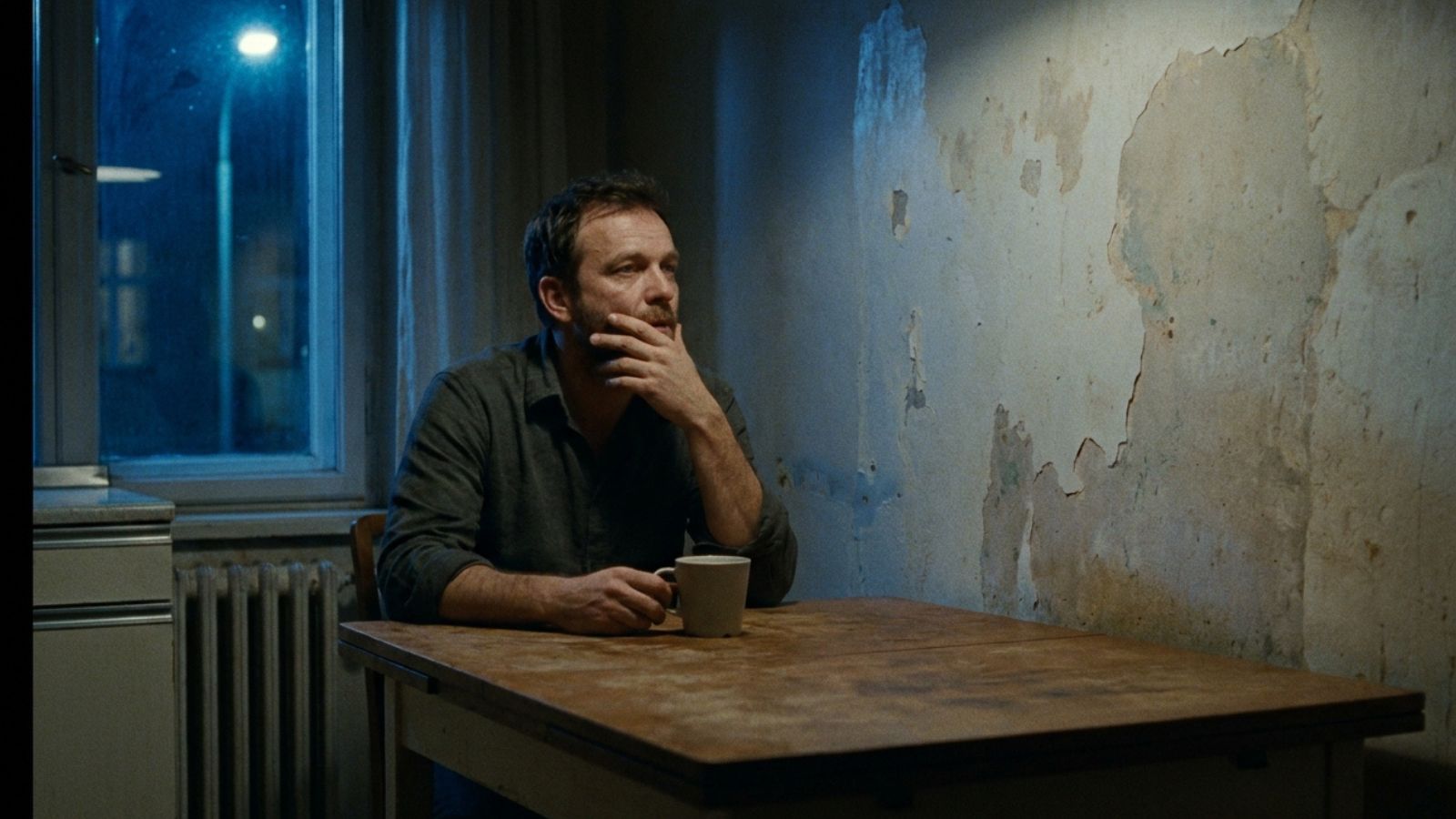
You’re in the shower, and suddenly you’re back in a conversation from three days ago. Your mouth moves. You’re saying the thing you should have said. The perfect comeback. The clarification that would have changed everything. Then you snap out of it and realize you’ve been standing in the water for five minutes, arguing with someone who isn’t there. If you’re asking why do I keep replaying conversations, you already know how exhausting it is. What you might not know is that your brain has a very specific reason for doing this. It’s not random. It’s not a flaw. It’s a mechanism, and once you understand it, you can begin to turn it off.
The clinical term for this is mental rehearsal, and it sits at the intersection of social anxiety, memory processing, and the brain’s desperate need for closure. Replaying conversations isn’t the same as general overthinking. It’s targeted. Specific sentences. Specific moments. Your brain latches onto interactions it perceives as unresolved or threatening, and it runs them on repeat like a security tape it can’t stop reviewing. This article will walk you through exactly why this happens and, more importantly, what to do when your brain refuses to let a conversation end.
Key Takeaways:
- Your Brain Is Seeking Closure, Not Punishment: The replay isn’t self-torture. It’s a failed attempt to resolve something that still feels open. Understanding why do I keep replaying conversations begins with recognizing that your brain is trying to finish something, not hurt you.
- Social Anxiety Amplifies the Loop: If you’re prone to worrying about how others perceive you, your brain will flag ambiguous social interactions as threats and keep reviewing them for signs of rejection.
- You Can’t Edit a Conversation That Already Ended: The loop stops when you accept that no amount of mental rehearsal will change what happened. Closure is something you give yourself, not something you extract from the past.
1. Unfinished Emotional Business Keeps the File Open
Your brain treats conversations like tasks. A finished conversation gets filed and forgotten. An unfinished one stays open, cycling in the background, waiting for resolution. This is the Zeigarnik effect. You remember interrupted tasks far more vividly than completed ones. If a conversation ended with something unsaid, something misunderstood, or something that left you feeling exposed, your brain registers it as incomplete. It will keep pulling the file back up, hoping you’ll find the missing piece and close it.
When you ask why do I keep replaying conversations, the most common answer is that something in the interaction never reached closure for you. Maybe you didn’t defend yourself when you should have. Maybe you said too much and wish you hadn’t. Maybe the other person’s reaction was ambiguous and left you uncertain about where you stand. The replay isn’t about the words. It’s about the emotional tension those words left behind. Until that tension is resolved, the conversation isn’t over for your brain, even if it ended hours, days, or weeks ago.
This is the same mechanism behind why you can’t stop ruminating on past events. The content changes, but the engine is the same. Unresolved emotional data keeps the brain spinning until it finds a way to process it.
2. The Social Barometer Is Checking for Approval

Humans evolved to be hyperaware of social standing. Being accepted by the group was once a matter of survival. That ancient wiring still runs beneath every conversation you have. When you interact with someone, your brain immediately starts scanning for signals: Did they approve? Did I say something wrong? Am I still safe in this relationship? If any of those signals come back ambiguous, your brain treats it like an open threat. It will replay the conversation again and again, searching for clues about your social standing.
This is especially intense if you have any degree of social anxiety. The socially anxious brain doesn’t just process conversations. It audits them. It goes back through every sentence, every pause, every shift in eye contact, looking for evidence of rejection or disapproval. If you’re wondering why do I keep replaying conversations more than most people, social sensitivity is probably part of the answer. You’re not just remembering what was said. You’re scanning for whether you’re still accepted. That’s not a flaw in your thinking. That’s an ancient survival system working overtime.
3. The Brain Is Trying to Rewrite the Ending
When you replay a conversation and imagine what you should have said, you’re doing something called counterfactual thinking. Your brain constructs an alternate version of events where you were sharper, funnier, braver, or more composed. This isn’t useless daydreaming. Psychologically, it’s an attempt to regain control over a situation that made you feel powerless. If you can rewrite the ending in your head, you can temporarily relieve the discomfort of how it actually went.
The problem is that counterfactual thinking doesn’t actually resolve anything. It just feeds the loop. The more you rewrite the conversation, the more your brain learns that the memory is malleable—and therefore worth revisiting. Each replay becomes an invitation to edit. Each edit reinforces the neural pathway. What starts as a single awkward conversation becomes a nightly performance with infinite alternate endings. The search for why do I keep replaying conversations often leads here: you’re not just remembering. You’re trying to fix. And the fixing never ends because the past can’t be edited. It can only be accepted.
4. Emotional Intensity Tags the Memory as Important
Your brain doesn’t treat all memories equally. It prioritizes the ones with high emotional charge. If a conversation made you feel humiliated, rejected, or deeply hurt, it gets tagged with a high-importance marker. The amygdala—the brain’s emotional alarm system—essentially tells your hippocampus: “This one matters. Keep it close. We might need to review it for future threats.” The replay isn’t random. It’s your brain treating the conversation like a security incident that requires further analysis.
This is why you can forget a casual chat with a stranger almost instantly, but a painful argument with someone you love loops for weeks. The emotional weight of the interaction determines how many times your brain will replay it. Understanding why do I keep replaying conversations means recognizing that your brain is trying to protect you from future harm by studying past threats. The irony is that this protective mechanism often causes more suffering than the original conversation did.
This connects directly to why you can’t stop thinking about someone who hurt you. The brain treats emotional injuries like puzzles it needs to solve to stay safe.
5. How to Stop Replaying Conversations

Knowing why do I keep replaying conversations is only half the answer. The other half is knowing how to make it stop. First, give the conversation a definitive ending. Write down what you wish you had said. Say it out loud to an empty room. Record a voice memo and delete it. The point is to complete the loop your brain keeps trying to close. Unfinished conversations haunt you. Finished ones fade.
Second, accept the actual outcome. This is harder than it sounds. You have to tell yourself: “That conversation went the way it went. I cannot change it. I can only learn from it.” This acceptance signals to your brain that the file is closed. No more edits needed. Third, physically interrupt the loop. When you catch yourself replaying, stand up. Move to a different room. Do something that requires enough coordination to pull your brain’s attention away from the memory. The replay is a trance. Physical movement breaks trances.
Finally, if the conversation involves another person and there’s genuine unresolved business, address it directly. A short, clear message can sometimes close the loop in minutes. Not every conversation needs to be replayed. Some just need to be finished. This is the same principle used in understanding how human behavior is driven by unclosed emotional loops. Once the loop is closed, the mind moves on.
You can read more about the psychology of social cognition and mental rehearsal from the American Psychological Association to understand why these closure techniques are so effective.
When the Conversations Finally Stop
The change won’t happen all at once. You’ll still catch yourself mid-replay. But the episodes will get shorter. Less intense. One day you’ll remember the conversation without the emotional punch that used to come with it. That’s the sign the loop is losing power. Your brain will finally accept that the conversation is over—not because the perfect comeback finally arrived, but because you stopped needing one. That’s the real answer to why do I keep replaying conversations: you keep replaying because you keep hoping for a better ending. When you accept the ending you got, the replay stops. Not because you fixed the past, but because you stopped needing the past to be different.
Ben’s Note:
The conversation you keep replaying is already over. The person you’re arguing with isn’t listening. The only person still in that room is you. Walk out. The door has been open the whole time.
Learn More About Stopping Mental Rehearsals
To further understand how to stop the cycle of replaying past interactions and calm your mind, watch this practical breakdown:
Frequently Asked Questions
Q: Is replaying conversations a sign of social anxiety?
A: It can be. Occasional replay is normal—most people mentally revisit important or awkward conversations from time to time. But if you’re doing it daily, for hours, and it’s causing significant distress, it’s often a symptom of social anxiety or generalized anxiety. The key difference is frequency and intensity. Normal reflection passes quickly. Anxiety-driven replay feels compulsive and exhausting. If it’s interfering with your life, consider speaking with a therapist about cognitive behavioral techniques.
Q: Why do I replay conversations more at night?
A: At night, your brain’s Default Mode Network becomes active. This network handles self-reflection and memory processing. With fewer external distractions, your brain defaults to the most emotionally charged material from the day—or the week, or the year. This is the same reason you still think about your ex when you’re trying to fall asleep. The silence removes your defenses, and the unresolved conversations rise to the surface. Giving your brain a structured outlet before bed, like journaling, can reduce nighttime replays.
Q: Does replaying conversations mean I have OCD?
A: Not necessarily. While compulsive mental review can be a feature of obsessive-compulsive disorder, isolated conversation replay is more commonly linked to social anxiety, rumination, or perfectionism. OCD typically involves intrusive thoughts across multiple domains, accompanied by compulsive behaviors meant to neutralize the anxiety. If you’re only replaying conversations and not experiencing other OCD symptoms, it’s more likely a form of rumination or social anxiety.
Q: Can therapy help with excessive conversation replay?
A: Yes. Cognitive behavioral therapy (CBT) is particularly effective. A therapist can help you identify the thought patterns that trigger the replay, challenge distorted beliefs about social evaluation, and develop specific techniques to interrupt the loop. Metacognitive therapy, which focuses on changing your relationship with your thoughts rather than the thoughts themselves, has also shown strong results for rumination. For immediate strategies, the techniques in how to stop ruminating can help you begin breaking the loop today.