
Why silence drives her crazy may have less to do with attraction and more to do with uncertainty, perceived rejection, unresolved conflict, and not knowing where she stands.
When communication suddenly stops, a person may begin replaying the last conversation, checking their phone, questioning what they did wrong, or imagining several possible explanations. The silence can become mentally consuming because it provides no clear information.
That reaction does not prove that silence has made her fall in love, increased your value, or created biological addiction. It means the absence of communication may have activated concerns about connection, safety, respect, or rejection.
Silence can serve very different purposes. It may be a healthy pause to calm down, a clear boundary after a breakup, emotional shutdown during conflict, ordinary unavailability, ghosting, or deliberate punishment. The motive and context determine whether the silence protects the relationship or damages it.
Why Silence Drives Her Crazy: Key Takeaways
- Silence can create uncertainty because the other person receives no explanation for what has changed.
- Being ignored may be experienced as social rejection, particularly when the relationship previously felt close.
- People higher in attachment anxiety may respond with more rumination, reassurance-seeking, and fear of abandonment.
- Thinking about you more does not necessarily mean she desires you more.
- A temporary, explained pause is different from ghosting, stonewalling, or punitive silent treatment.
- Deliberately withholding communication to create anxiety is manipulation, not emotional strength.
- Healthy boundaries communicate what is happening, why space is needed, and when communication may resume.
1. Silence Creates an Information Gap
People usually tolerate difficult information better than prolonged ambiguity. A clear answer may hurt, but unexplained silence leaves several competing possibilities active at once.
She may wonder:
- Is he busy, angry, hurt, or finished with the relationship?
- Did I misunderstand our last interaction?
- Is he waiting for me to reach out?
- Is he speaking to someone else?
- Did something happen to him?
- Am I being punished?
Because there is no new information to resolve these questions, the mind may keep returning to them. This can look like obsession, but the driving force may be uncertainty rather than romantic desire.
The silence becomes especially difficult when communication was previously frequent and the change happens without warning.
2. Being Ignored Can Feel Like Social Rejection
Human beings are sensitive to signs that an important relationship may be weakening. Being ignored or excluded can threaten the need to belong and create hurt, sadness, anger, or anxiety.
Even subtle signs of low responsiveness can lead someone to question their relational value:
Does this person still care about me, respect me, or consider this relationship important?
This reaction is not uniquely female. Men and women can both experience distress when a valued partner suddenly becomes unavailable or refuses to acknowledge them.
Research on ostracism and interpersonal rejection suggests that being ignored can threaten belonging, self-esteem, control, and a sense that one matters to others.

3. Attachment Anxiety Can Intensify the Reaction
People differ in how they respond to relational uncertainty.
Someone with stronger attachment anxiety may be more likely to:
- Monitor changes in response time
- Assume ambiguous behavior signals rejection
- Replay conversations repeatedly
- Seek reassurance
- Fear abandonment
- Send repeated messages to restore contact
This does not mean every distressed reaction is caused by an attachment style, and it does not justify labeling someone as anxious based on one situation.
The actual behavior of the silent partner also matters. A generally secure person may become distressed if someone repeatedly disappears, withholds affection, or refuses to communicate after conflict.
Attachment theory should not be used to blame the person reacting while excusing the person creating chronic uncertainty.
4. Silence Can Trigger Rumination
Rumination involves repeatedly thinking about distressing questions without reaching a useful resolution.
Silence provides the perfect conditions for rumination because the person has limited evidence but many possible interpretations.
She may repeatedly review:
- The final message
- The tone of the last call
- Changes in your recent behavior
- Your social media activity
- Earlier arguments
- Anything that might explain the withdrawal
Each review can make the issue more mentally accessible. That may cause her to think about you more often, but increased attention should not be confused with increased affection.
A person can think constantly about someone because they feel confused, rejected, unsafe, angry, or desperate for clarity—not because the relationship has become more attractive.
5. Sudden Silence Violates an Established Pattern
Relationships create expectations. If you usually speak every morning, check in after work, or respond within a predictable period, your absence becomes noticeable.
The more established the pattern, the more meaningful a sudden change may feel.
For example:
- A delayed reply from someone who is normally slow may mean very little.
- A complete disappearance from someone who communicates daily may feel significant.
- A short pause after saying, “I need an hour to calm down,” is understandable.
- Days of unexplained silence after conflict may feel punitive or destabilizing.
The emotional effect therefore depends less on a universal scarcity principle and more on the contrast between the relationship’s normal pattern and the new behavior.
6. Silence Can Remove Her Sense of Control
Communication allows both people to respond, clarify, apologize, disagree, negotiate, or leave. Unexplained silence removes that opportunity.
The receiving person may feel unable to:
- Understand what happened
- Correct a misunderstanding
- Express their perspective
- Know whether the relationship still exists
- Make an informed decision about what to do next
This loss of control can intensify distress. It may also create an urge to contact you repeatedly—not because repeated pursuit is healthy, but because the person is attempting to restore clarity and agency.
Deliberately exploiting that reaction to gain power turns silence into coercion.
7. Previous Experiences Can Shape the Meaning of Silence
Silence does not occur in a psychological vacuum. Its meaning is influenced by the person’s history and by what has already happened in the relationship.
A stronger reaction may occur when someone has previously experienced:
- Ghosting
- Sudden abandonment
- Inconsistent caregiving
- Partners who withdrew affection as punishment
- Repeated betrayal or deception
- Relationships in which conflict was never repaired
That history can make present silence feel more threatening. However, it is still important not to assume that every reaction results from childhood trauma or a mental health condition.
Sometimes the present behavior is genuinely confusing and hurtful.
Thinking About You More Does Not Mean She Wants You More
This is the distinction that manipulative dating advice often ignores.
Silence may increase:
- Curiosity
- Anxiety
- Rumination
- Anger
- Fear of rejection
- The urge to regain control
None of these reactions automatically equals romantic attraction.
Someone may pursue an explanation and then lose trust once communication resumes. She may contact you because she wants clarity, not because your perceived value increased.
Emotional activation can make a relationship feel intense. Intensity is not the same as safety, compatibility, respect, or sustainable desire.
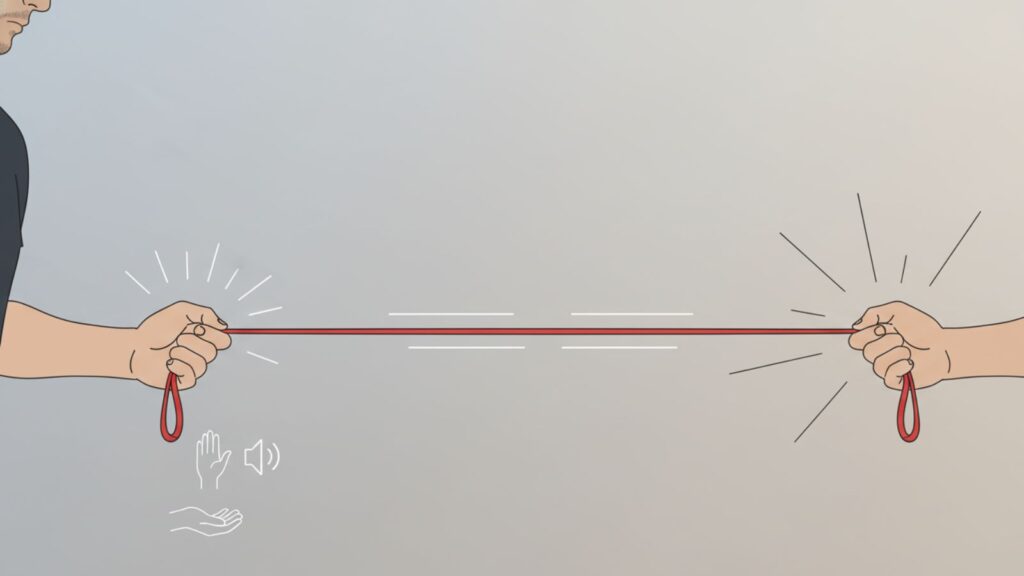
Healthy Space vs. Silent Treatment vs. Stonewalling
Not all silence is harmful. The differences are found in intention, communication, duration, and willingness to repair.
Healthy Space
Healthy space is communicated clearly and used to regulate emotions rather than punish the other person.
I am too overwhelmed to discuss this respectfully right now. I need an hour to calm down, and I will call you at eight.
The other person knows what is happening and when communication may resume.
Silent Treatment
The silent treatment involves deliberately withholding acknowledgment or communication to express disapproval, punish, pressure, or control.
It often leaves the other person uncertain about what is wrong and what they must do to restore contact.
Stonewalling
Stonewalling generally describes disengaging from an interaction by shutting down, refusing to respond, or withdrawing from the conversation.
It may be intentional, but it can also happen when someone feels emotionally flooded and lacks the ability to continue constructively.
Even when the motive is self-protection rather than punishment, repeated stonewalling can damage communication and relationship satisfaction if the person never returns to repair the conflict.
No Contact
No contact can be an appropriate boundary after a breakup, abuse, harassment, repeated boundary violations, or a relationship that cannot continue safely.
It should not be presented as a temporary trick designed to make someone panic and chase.
When Silence Is a Healthy Boundary
You are not required to remain available to every person indefinitely.
Silence or no contact may be appropriate when:
- The relationship has clearly ended
- The other person repeatedly ignores stated boundaries
- Communication becomes abusive or threatening
- Continued contact prevents recovery after a breakup
- You have clearly stated that you will no longer participate
- Responding would place your safety at risk
A boundary is meant to govern your own participation. It is not a hidden test requiring the other person to react correctly.
If the situation is safe and a relationship is still active, a brief explanation usually prevents unnecessary ambiguity:
I do not want to continue this conversation tonight. I will contact you tomorrow after I have had time to think.
That message protects space without using uncertainty as a weapon.
When Silence Becomes Manipulation
Silence becomes manipulative when its purpose is to produce fear, confusion, compliance, jealousy, or pursuit.
Warning signs include:
- Ignoring messages while visibly remaining active online to provoke a reaction
- Withholding affection until the other person apologizes
- Refusing to explain what is wrong
- Returning only after the other person begs or accepts blame
- Repeatedly disappearing to test loyalty
- Using silence to make someone fear abandonment
- Deliberately varying attention to create dependency
These tactics may generate pursuit in the short term. They also teach the other person that connection is unstable and can be removed whenever they displease you.
That is not emotional leadership. It is conditional access used as control.
Ben’s Note: You do not prove strength by making another person anxious enough to chase you. Strength is the ability to state a boundary clearly, tolerate their response, and leave honestly when the relationship no longer meets your standards.
What to Do Instead of Using Silence as a Tactic
1. State What Is Happening
Use one direct sentence rather than disappearing:
I am upset and need time before I can discuss this calmly.
2. Give a Reasonable Time Frame
When possible, say when you expect to return to the conversation. A pause without any time frame can become indefinite avoidance.
3. Return When You Said You Would
A healthy pause only works if communication resumes. Otherwise, “I need space” becomes a respectable phrase covering permanent withdrawal.
4. Do Not Reward Disrespect With Endless Access
Clear communication does not require tolerating insults, manipulation, threats, or repeated violations. You can end the interaction without trying to make the person anxious:
I will not continue this conversation while I am being insulted. We can speak when it is respectful.
5. Judge Interest by Reciprocity, Not Panic
A flood of messages after you disappear does not necessarily demonstrate healthy interest. Look instead for consistent effort, honesty, respect, accountability, affection, and willingness to repair conflict.
6. Accept Clear Disinterest
If she is not initiating, investing, or expressing romantic interest, withdrawing strategically will not manufacture compatibility.
You can preserve your dignity by accepting the evidence and moving forward without punishing her for not feeling what you hoped she would feel.
If no contact has left you repeatedly analyzing what the other person might be thinking, read Someone Is Always on Your Mind: 7 Psychological Reasons.
Frequently Asked Questions
Why does silence affect her so much?
Silence may create uncertainty, perceived rejection, loss of control, or fear that the relationship has changed. Her reaction will depend on the relationship, communication pattern, attachment tendencies, previous experiences, and reason for the silence.
Does silence make a woman miss you?
She may notice your absence or miss aspects of the relationship. However, silence can also create anger, distrust, relief, or emotional withdrawal. It does not guarantee renewed attraction.
How long should I stay silent?
There is no universal number of hours or days. If you need a temporary pause during an active relationship, explain why and provide a reasonable time to reconnect. If the relationship has ended or contact is unsafe, no contact may continue indefinitely as a boundary.
Is silence powerful after an argument?
A short, clearly communicated pause can prevent escalation when emotions are high. Unexplained withdrawal or refusing to return to the discussion can undermine trust and prevent repair.
What is the difference between space and the silent treatment?
Healthy space is communicated, time-limited when possible, and followed by renewed discussion. The silent treatment deliberately withholds acknowledgment or communication to punish, pressure, or control.
Will she chase me if I stop texting?
She may contact you, remain silent, feel relieved, become confused, or move on. A response cannot be guaranteed. Use communication and boundaries to protect your wellbeing, not to engineer pursuit.
Final Perspective
Why silence drives her crazy may involve uncertainty, perceived rejection, rumination, attachment concerns, disrupted communication patterns, and the loss of an opportunity to understand what changed.
It does not prove that silence increases your romantic value, creates dopamine addiction, or makes every woman chase.
Healthy strength is not measured by how long you can ignore someone. It is measured by whether you can regulate yourself, communicate a boundary, return to difficult conversations, and leave honestly when mutual respect is no longer possible.
Use silence when communication is unsafe or when you have clearly ended your participation. Use an explained pause when you need to calm down. Do not use another person’s uncertainty as evidence that your strategy is working.
Sources and Further Reading
- Antecedents and Consequences of Silent Treatment in Close Adult Relationships: A Systematic Review
- Emotional Responses to Interpersonal Rejection
- Responses to Ostracism Across Adulthood
- Attachment Orientations, Rumination, and Negative Conflict Styles
- Communication, Romantic Attachment, and Relationship Satisfaction
- Cyber Dating Abuse and Ghosting Behaviors